As you look for lift kits and truck accessories in Reading, first decide whether a leveling option or full suspension lift is right for you. A leveling upgrade corrects factory rake and maintains daily manners, while a suspension lift provides clearance, wheel travel, and larger tire fitment. Make sure you have precise year, trim, drivetrain, and suspension information to verify Rough Country compatibility. Plan your spending for tires, alignment, and accessories including steps, lights, or liners—you'll see how the proper setup takes shape.
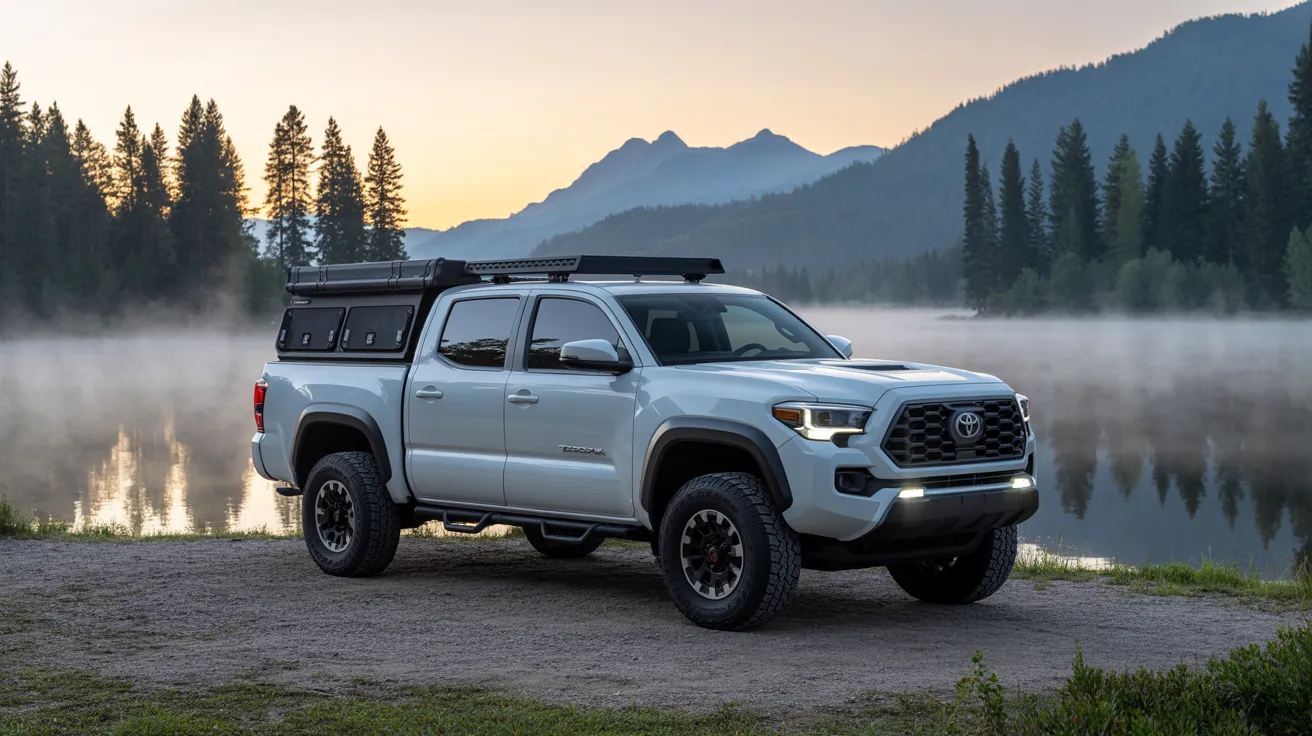
Essential Information
- Select a leveling kit to eliminate factory rake while maintaining near-stock handling and allowing slightly larger tires for daily commuting.
- Select a suspension lift kit to achieve more clearance, suspension movement, and off-road performance, understanding that handling and steering will change.
- Verify exact fitment using your truck's year, make, model, drivetrain, trim, cab, bed, and suspension package before ordering Rough Country components.
- Align lift height and shock choice with your needs, covering commuting, trail use, towing, or intensive off-road driving.
- Reserve money for beyond the kit price itself, with costs for alignment, labor, wheels, tires, shocks, and extra accessories like steps, lights, and liners.
Suspension Lifts versus Leveling Kits
While both modifications change your truck's stance, leveling kits and suspension lift kits address different problems and deliver different outcomes. A leveling kit usually raises the front to match the rear, correcting factory rake with little change to geometry, ride height, and drivability. You use one when you want a cleaner profile and room for slightly larger tires.
A suspension lift raises the whole truck and modifies key components to create increased clearance and suspension movement. You'll observe major gains in ride height, off-road capability, and tire fitment, though you should plan for handling tradeoffs, steering changes, and a higher center of gravity. If you want subtle visual changes, level it. When you need real clearance and articulation, use a suspension lift and plan the supporting mods around your use case.
Determine which Rough Country lift kit works your truck.
Kick off by noting your truck's year, manufacturer, and model, drivetrain, and planned use, as Rough Country engineers lift kits around exact platform geometry and capability targets. That foundation reveals which brackets, struts, spacers, crossmembers, and hardware can bolt on without clearance or alignment issues.
Next, examine factory ride height, cabin and bed configuration, axle specification, and if your truck uses 2WD, 4WD, or adaptive suspension. Rough Country compatibility guides streamline this check, but you still need to confirm trim compatibility against trim-specific hardware and OEM package differences. A kit that fits a Silverado 1500 may not fit a Trail Boss, and a Ram with pneumatic suspension necessitates different accommodations than a truck with coil suspension. article After verifying exact fitment, you avoid installation issues, hardware conflicts, and reshipment delays.
Find the Rough Country lift kit that matches your driving style.
Select the kit to your driving patterns, and you'll get better ride quality, longevity, and additional tire clearance without spending on unused features. If commuting is your main activity, choose a basic Rough Country leveling kit or a suspension lift of 2 to 3.5 inches tuned for daily comfort and stable steering response.
If your truck sees both pavement and trail time, go with a suspension system featuring high-quality shocks and corrected arm angles. You'll enjoy enhanced off-road performance, better articulation, and room for larger tires without straining OEM components. For extensive off-road use, prioritize raised struts, N3 or Vertex dampers, and setups that keep driveline angles correct under compression. The correct Rough Country kit should match load, speed, terrain, and your preferred ride firmness.
Top Rough Country Truck Accessories
Finish your lift setup by adding Rough Country upgrades that solve the real weak points you'll encounter after lifting and upgrading tires. Focus on new running boards or rock guards, that regain vehicle access and add lower-vehicle protection now that your truck sits higher and broader.
focus
What Budget Should You Plan for Your Build?
After selecting the suspension lift and supporting accessories, allocate a budget above the base price. You'll need money for shock units, wheel sets, tires, alignment, labor, and any drivetrain or steering corrections your platform requires. Brand reputation matters; quality kits usually offer tighter tolerances, better ride quality, and easier installations.
For realistic budget ranges, expect budget-friendly spacer or leveling kits to start lower, while full suspension systems with control arms, tuned dampers, and larger tires escalate rapidly. Install difficulty, labor charges, and alignment calibration can add significantly. You should also budget for supporting upgrades like gear changes, brake components, and recovery gear if you're building for trail use. If cash flow matters, compare payment plans carefully and prioritize dependability over flashy add-ons.
Frequently Asked Questions
Can Lift Kits Affect Factory Warranty Coverage?
Yes, lift kits may affect your manufacturer's warranty, yet they won't automatically nullify it. You experience warranty concerns should a dealer shows the lift modification resulted in or played a role in a failure. Engine, steering, suspension, and drive system disputes often trigger dealer disputes. You should keep installation records, use quality components, and adhere to service schedules. That helps you dispute rejected claims and maintain warranty protection where the modification isn't responsible.
Does Going Bigger Require Gear Changes?
Yes—if you increase multiple tire sizes, you'll often require gearing changes. For example, when you move from 31s to 35s—your truck may feel underpowered, hunt for gears, plus create drivetrain stress under load. Gear ratio changes restores correct gear ratios, allowing you to recover acceleration, towing efficiency, and transmission operation. You might not need it for small tire upgrades, but if power, fuel economy, or shift quality drop, it's typically the right decision.
How Often Should Lift Kit Components Be Inspected?
You need to examine lift kit components after the first 500 miles, afterwards each time you change oil or at 3,000 to 5,000 mile intervals, based on your usage. Regular maintenance checks help you spot bushing wear, shock leaks, bracket damage, and alignment issues ahead of time. Verify fastener tightness post-aggressive terrain driving, cargo hauling, or hard impacts. If you drive in muddy, salty, or challenging terrain regularly, shorten intervals and examine suspension and steering parts more frequently.
Will a lift kit affect towing or payload capacity?
Yes, a lift kit can alter your truck's towing and payload limits. When you increase ground clearance for more ground clearance, you shift suspension alignment, weight balance, and force distribution on parts. That can reduce stability under load and add drivetrain strain, most notably with bigger tires. You should stick with your manufacturer's ratings unless an engineered kit specifically documents new ratings. Proper alignment, gearing, and braking function count as well.
Should Alignment Services be done after installing truck accessories?
Yes—if products shift ride height, suspension geometry, steering position, or tire circumference, you require an alignment service. You'll sense the outcome instantly: minor tweaks can steer your truck off-center, reduce tread life, and affect handling response. A thorough alignment realigns camber, caster measurement, and toe measurement to spec. After specific add-ons, you should also consider brake adjustment for driver-assist accuracy. You maintain tire life, steering control, and practical safety by getting alignment checked immediately.
Summary
Selecting the right suspension setup and accessories comes down to how you use your truck, what stance you want, and what your budget can handle. When you match a Rough Country kit to your driving style, you'll get power, ground room, and style which coordinate as efficiently as a calibrated engine. Add smart accessories, organize your budget responsibly, and you'll build a pickup which becomes reliable for streets, capable off it, and ready for whatever job comes next.